An ileostomy closure or reversal is a surgery that is performed to close the temporary ileostomy. Your surgeon will reconnect the ileum with the colon. Your stoma will be also closed at the end.
What happens before the surgery?
- You might require an enema before the surgery. The enema involves a contrast liquid that can be shown in the x-ray. Your surgeon will ensure that there is no leakage of the contrast liquid in the colon. He will also observe your anal sphincter to ensure that they are working properly. Your healthcare expert can guide you in a better way about the other tests that are needed.
- One day before the surgery you will be asked to stop eating solids and only drink simple water.
- You will not be allowed to eat or drink anything 8 hours before the surgery.
- Your healthcare provider will guide you about the medicines on the morning of the surgery.
What happens during the surgery?
- First of all, you will be given anesthesia so that you will remain asleep and you feel no pain during the surgery.
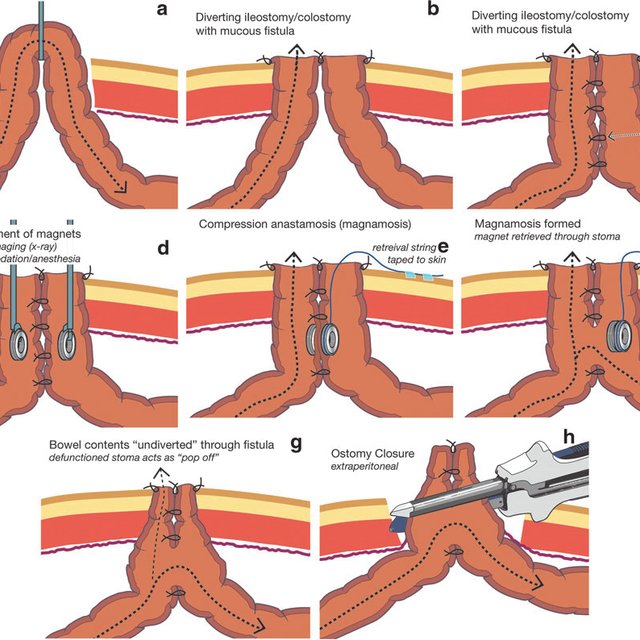
- Your healthcare expert will cut the stoma. He will pull the terminals of the ileum and colon out of your stomach. Then your healthcare expert will reconnect them with the stitches or staples. He might introduce saltwater to ensure there is no leakage.
- Your healthcare expert will locate the reconnected intestines in the abdomen through the hole or the cut. Then he will close the opening that was made on your abdomen with the help of stitches. Your surgeon might locate a drain under the skin to eliminate any additional fluids. In another case, he might leave your skin open to heal itself with time. He may cover your wound with a bandage.
What happens after the surgery?

After the surgery, you will be shifted to the restroom. You will remain under strict observation until you get conscious completely.
You will be asked to stay in the hospital until your normal bowel movement starts again.
What are the major complications and Risks after the surgery?
- There might be excessive bleeding. You may have an infection. Dehydration may occur.
- There can be bleeding at the points of stitches or staples. The bowel content may leak into the abdomen leading to the infection.
- You may have an infection at the point of stomal closing.
- There may be narrowing of the intestines that make the bowel movement difficult. There are chances that the intestines might stop working for few days after the surgery.
- A fistula can occur between the intestines and surrounding organs. There may be a blood clot formed in your leg or arm. This can be very fatal.
- Hernia: If there is bowel leakage directly into the abdominal cavity, this will cause a hernia. It can occur at the location near the wound or the scar. Old age people have higher chances to get a hernia, which shows within 2 years of the ileostomy.
- Anastomotic leakage: It’s a very rare situation. In this case, there is leakage at the point of bowel junction. Another surgery is needed to overcome this issue.
When to see your doctor:
If a patient notices any of the listed signs, he or she must contact his doctor immediately.
Leaking and blocking:
These signs include:
- Intense stomach pain
- Inflammation
- Vomiting
- Nausea
- Short breath
- Unusual Fatigue
- Difficulty in water consumption
- Discomfort during passing urine
- Diarrhea
Any kind of Infection
There are the chances that fluid present in the abdomen can be infectious. See your doctor if you feel the following signs:
- Temperature
- Pain
- Bloating
- Worsening diarrhea
Recovery
Usually, a person must wait for the healing of the ileostomy and the incision, following reversal surgery.
It has been reported that reversal surgery takes less time for healing as compared to the initial ileostomy surgery. Maybe a patient has to stay in the hospital for 3-4 days.
A person should remain calm and should know the fact that it will take some time to regain normal bowel functioning. Initially, a patient will notice small but frequent movements and the passing of gas. A patient needs to stay in hospital until their bowel movements get back to normal.
The incision that was made usually takes 4-6 weeks for a full recovery.
The Bottom Line
You must visit your doctor in case of any confusion. This piece is just for information, don’t take it personally. Always consult with an expert before using or applying any remedy.
 Ileostomy Fitness